








CS undergrad at San Francisco Bay University, building agent and developer infrastructure — systems that let an autonomous agent touch something that matters and then prove it did the right thing.
The throughline is that the shape of the data decides which questions you can ask. A semantic cache keys on meaning because an exact-match key never hits on LLM traffic. Airlock stores a change twice — applied and rolled back — because an approval without a checksum is a guess. Choose that shape wrong and no amount of application code rescues it.
Everything below is public, MIT, and has its tests in the repository.

LexisGuide · DOCKET · FORGE · Airlock · Semantic Output Cache
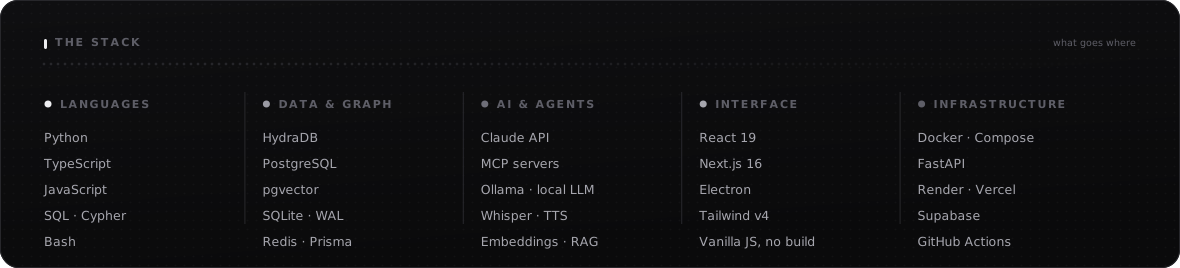
also — blast-radius, npm supply-chain exposure as a graph traversal rather than a similarity search, 381 tests · meridian, a financial terminal that tracks tax lots individually · Vivedly AI, a desktop coworker with a five-tier memory hierarchy
No mocked data, anywhere. Every number on every screen came back from a query that was actually run — including the empty states. A demo that lies is worse than no demo.
Measured, not claimed. If it says fast, there is a latency next to it. If it says safe, there is a checksum, an eval score, or a test id next to it.
Commits explain the change, not the diff. Answer the lockfile question from the lockfile. You can read the history and know what happened.
B.S. Computer Science — San Francisco Bay University, since 2025. Coursework in data structures, systems and databases; most of what is above was built outside of it.
I move fast and I would rather build the hard version. If you are working on agent infrastructure, graph systems, or developer tooling — or you want someone who ships over a hackathon weekend and still writes the tests — I would like to hear from you.
rohitmaruriats@gmail.com · open to internships, hackathon teams, and OSS collaboration